iTea - Intelligent Tea Brewing Assistant
Interactive Systems group project at Saarland University: a working physical prototype that used NFC tea cards, a scale, OLED feedback, timers, temperature estimation, Telegram notifications, and a web dashboard to guide tea brewing.
My role
Web Interface Developer · Group Prototype Contributor · Interactive Systems
Current contribution
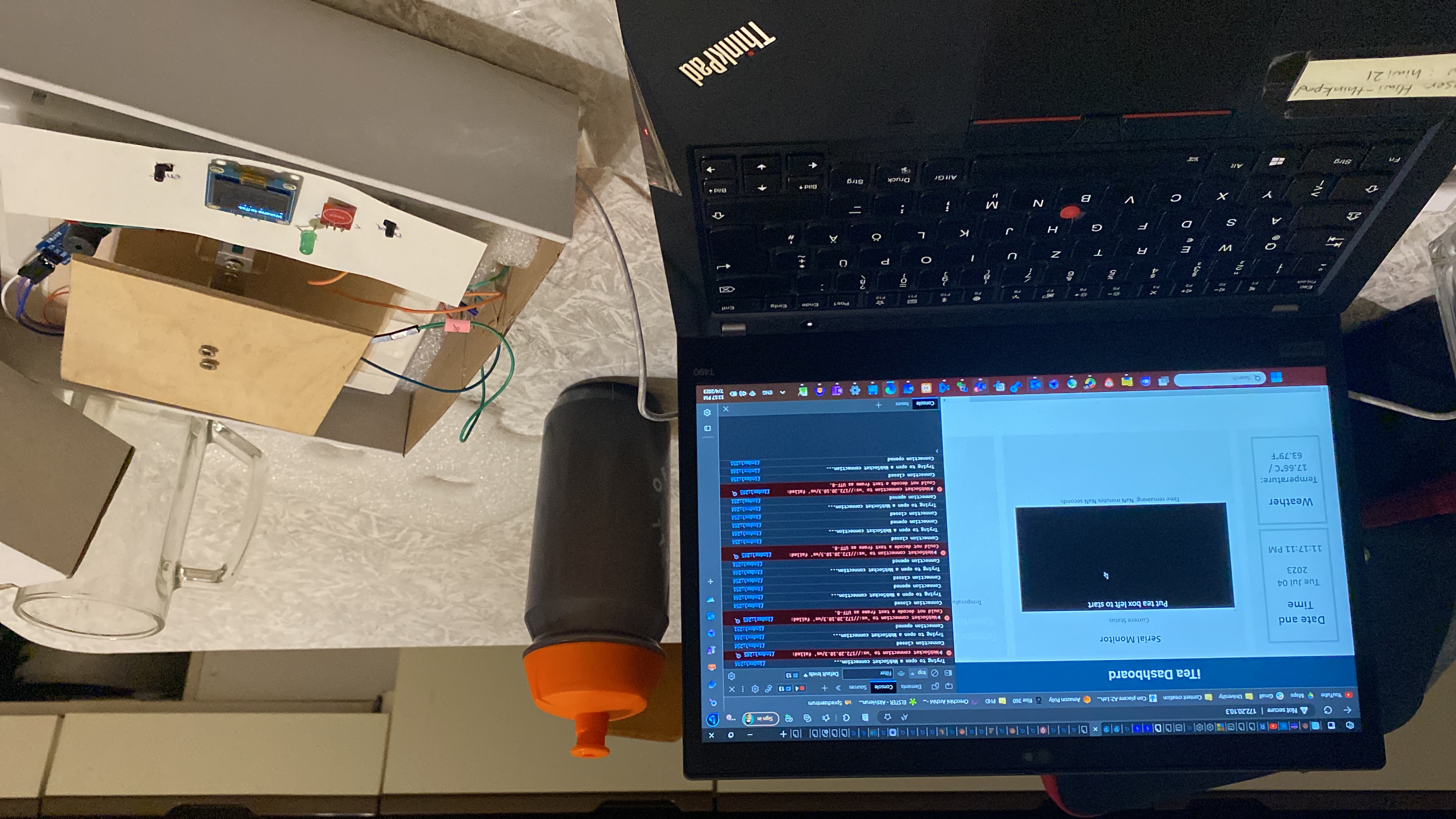
The result was a demonstrable connected prototype that helped users follow numbered brewing phases, receive timing feedback, and monitor progress on both the device and the web interface. User testing reported good usability scores and positive feedback on the smooth transition between brewing phases.
Case story
Overview
iTea was built for the Interactive Systems course as a group prototype for guided tea preparation. Instead of fully automating tea making, the device assisted the user with stored tea instructions, phase-by-phase feedback, timers, and status visibility.
Interaction Problem
Different teas require different temperatures, steeping times, amounts, and sometimes multiple infusions. The project asked how a physical assistant could reduce guesswork while still keeping the user in control of the brewing process.
My Contribution
My main contribution was building the web app / web interface for the device. The interface provided a dashboard view of the brewing process, showing device instructions, timer information, and temperature-related status so the physical prototype could be monitored from a browser.
Prototype Flow
Tea instructions were written to NFC cards attached to tea boxes. During brewing, the device read the card, let the user choose an infusion, detected the cup with a scale, started the cooling and steeping timers, signaled actions with the display, LED, and buzzer, and exposed progress through the website.
Technical Build
The prototype combined an ESP8266/Wemos D1 Mini, PN532 NFC reader, HX711 load cell, SSD1306 OLED display, buttons, LED feedback, buzzer alerts, Arduino/PlatformIO firmware, Telegram bot interaction, and a lightweight HTML/CSS/JavaScript dashboard.
Evaluation
The group tested the prototype with users and compared the temperature approximation against thermometer readings. The report noted good SUS scores and feedback that users understood the phase transitions, while also identifying improvements such as clearer instructions, a larger screen, a more compact waterproof housing, and a more self-contained app experience.
What It Shows
As a portfolio project, iTea shows my ability to connect a real physical prototype with a usable browser interface, work inside a multidisciplinary group, and think about interaction design across hardware, software, user feedback, and everyday routines.
Gallery
Materials & Links
Open the project evidence
Reports, posters, demos, code, and related links are collected here so visitors can inspect the work behind the case study.