FocusDojo
FocusDojo is my product work around a connected question: how can independent study feel calm, structured, and emotionally sustainable for students who are anxious, easily distracted, or burnt out on gamified productivity apps?
My role
Product Strategy · Behavioral UX Design · Learning Experience Design
Value created
Two implementation-ready specs - covering the full session state machine and the nine-theme CSS token architecture - were finalized through iterative design review and handed off for build. FocusDojo is currently in beta development, priced at €1/month (€10/year) with a 30-day trial, extending ScienceDojo's human-first philosophy into a student's independent study time.
Case story
Problem
Students dealing with study anxiety are usually offered two disconnected tools: Pomodoro timers that ignore emotional state, and ambient-music apps that ignore structure. Worse, most productivity apps actively work against calm focus, using streaks, fake scores, and guilt mechanics that turn studying into another source of anxiety instead of relief from it.
Process
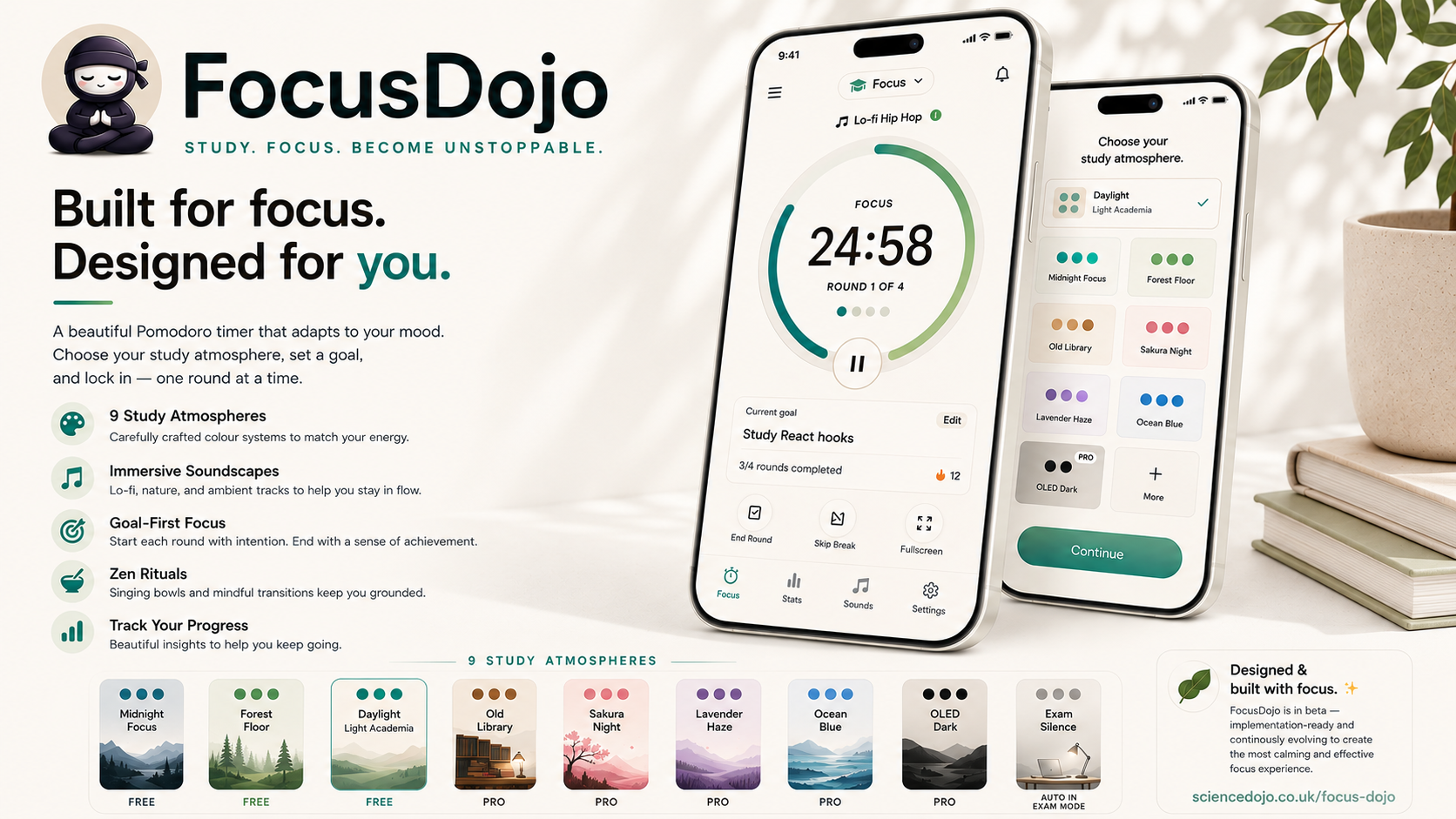
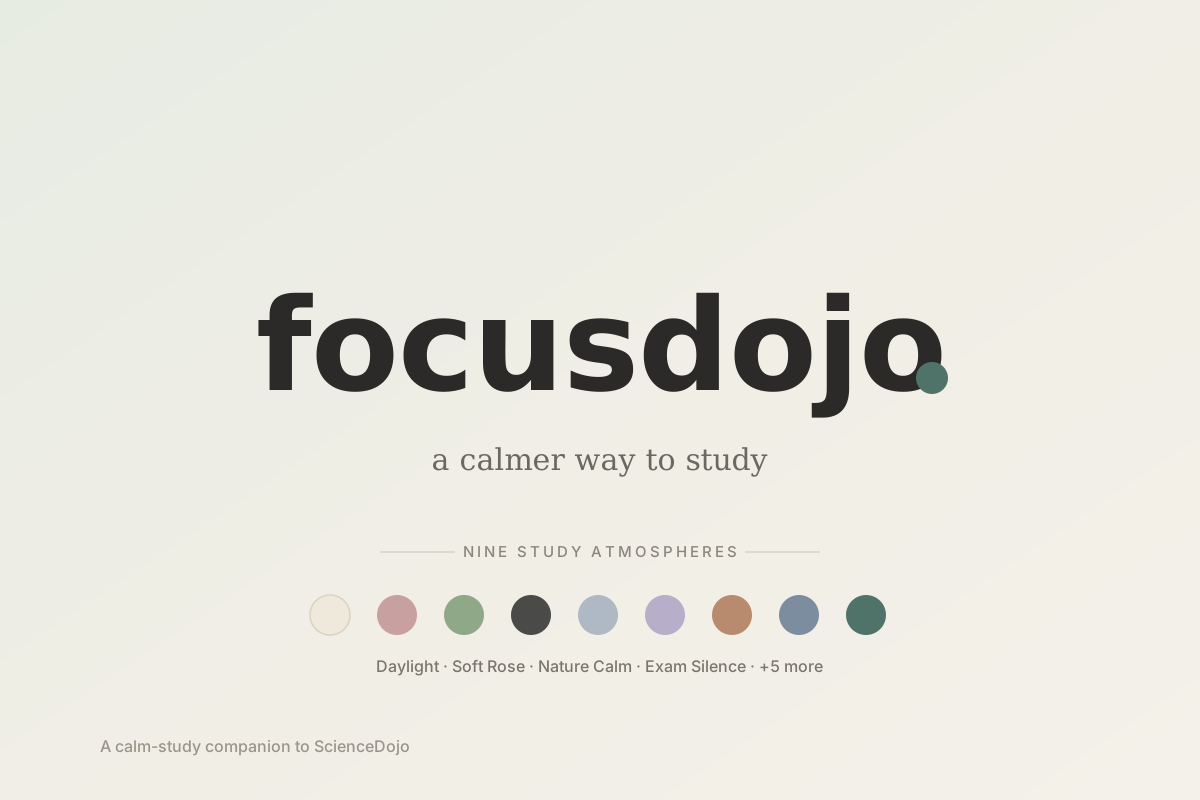
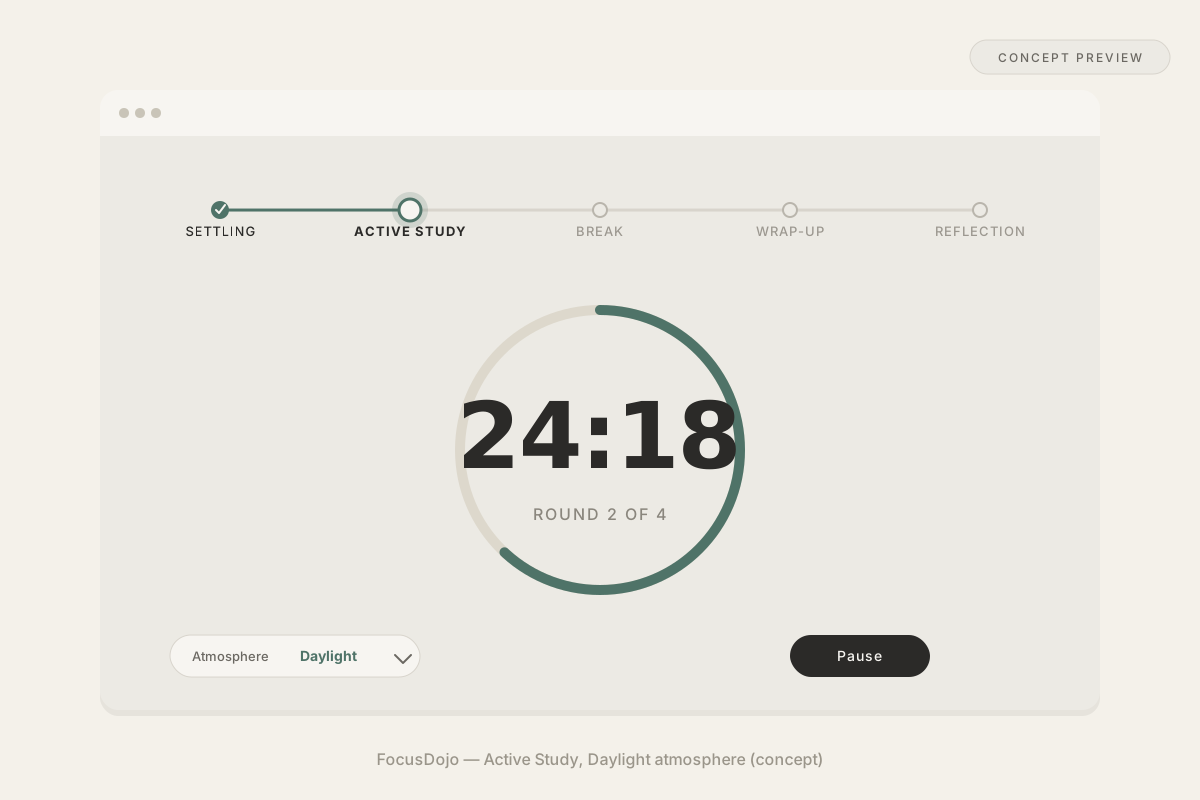
I started from research on academic stress cycles, the psychological difference between studying and exam-day pressure, and why gamified guilt mechanics backfire on already-anxious students. From there I shaped the product philosophy and designed a five-state session flow - Settling, Active Study, Break, Wrap-Up, Reflection - paired with a nine-theme study atmosphere system, so the visual environment shifts with the student's mode instead of staying static. Every mechanic was checked against one rule: does this reduce guilt, or add to it? Streaks, scores, and leaderboards did not pass, so they were cut.
Outcome
Two implementation-ready specs - covering the full session state machine and the nine-theme CSS token architecture - were finalized through iterative design review and handed off for build. FocusDojo is currently in beta development, priced at €1/month (€10/year) with a 30-day trial, extending ScienceDojo's human-first philosophy into a student's independent study time.
What I would improve next
Next I would test the core Settling -> Reflection flow with a small group of real students before finishing all nine atmospheres, to validate the emotional pacing itself before investing further in visual variety.
Process artifacts
Evidence of the thinking behind the work
Research framing
Students dealing with study anxiety are usually offered two disconnected tools: Pomodoro timers that ignore emotional state, and ambient-music apps that ignore structure. Worse, most productivity apps actively work against calm focus, using streaks, fake scores, and guilt mechanics that turn studying into another source of anxiety instead of relief from it.
Workflow sketch
I started from research on academic stress cycles, the psychological difference between studying and exam-day pressure, and why gamified guilt mechanics backfire on already-anxious students. From there I shaped the product philosophy and designed a five-state session flow - Settling, Active Study, Break, Wrap-Up, Reflection - paired with a nine-theme study atmosphere system, so the visual environment shifts with the student's mode instead of staying static. Every mechanic was checked against one rule: does this reduce guilt, or add to it? Streaks, scores, and leaderboards did not pass, so they were cut.
Design decision
Next I would test the core Settling -> Reflection flow with a small group of real students before finishing all nine atmospheres, to validate the emotional pacing itself before investing further in visual variety.
Gallery
Materials & Links
Open the project evidence
Reports, posters, demos, code, and related links are collected here so visitors can inspect the work behind the case study.